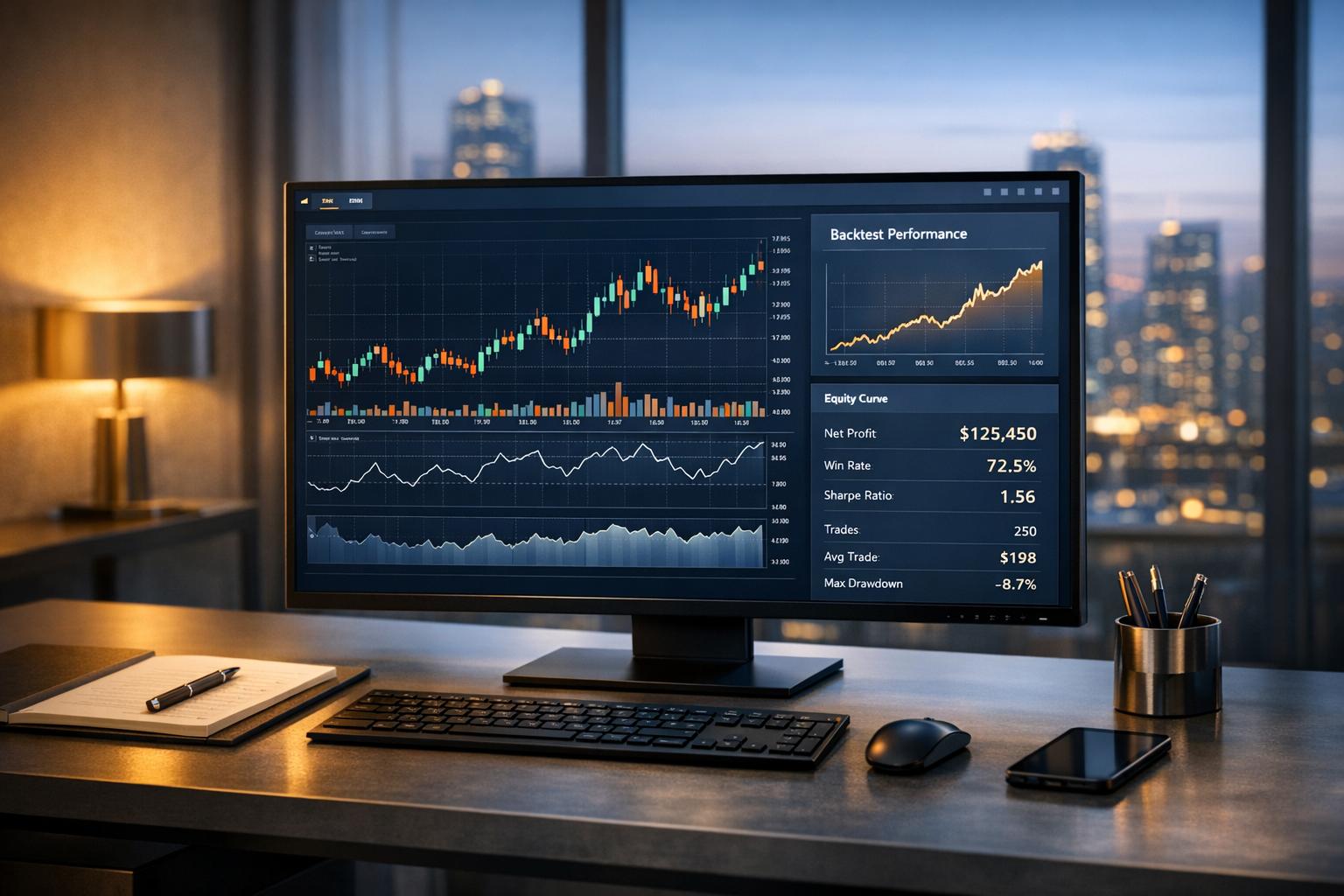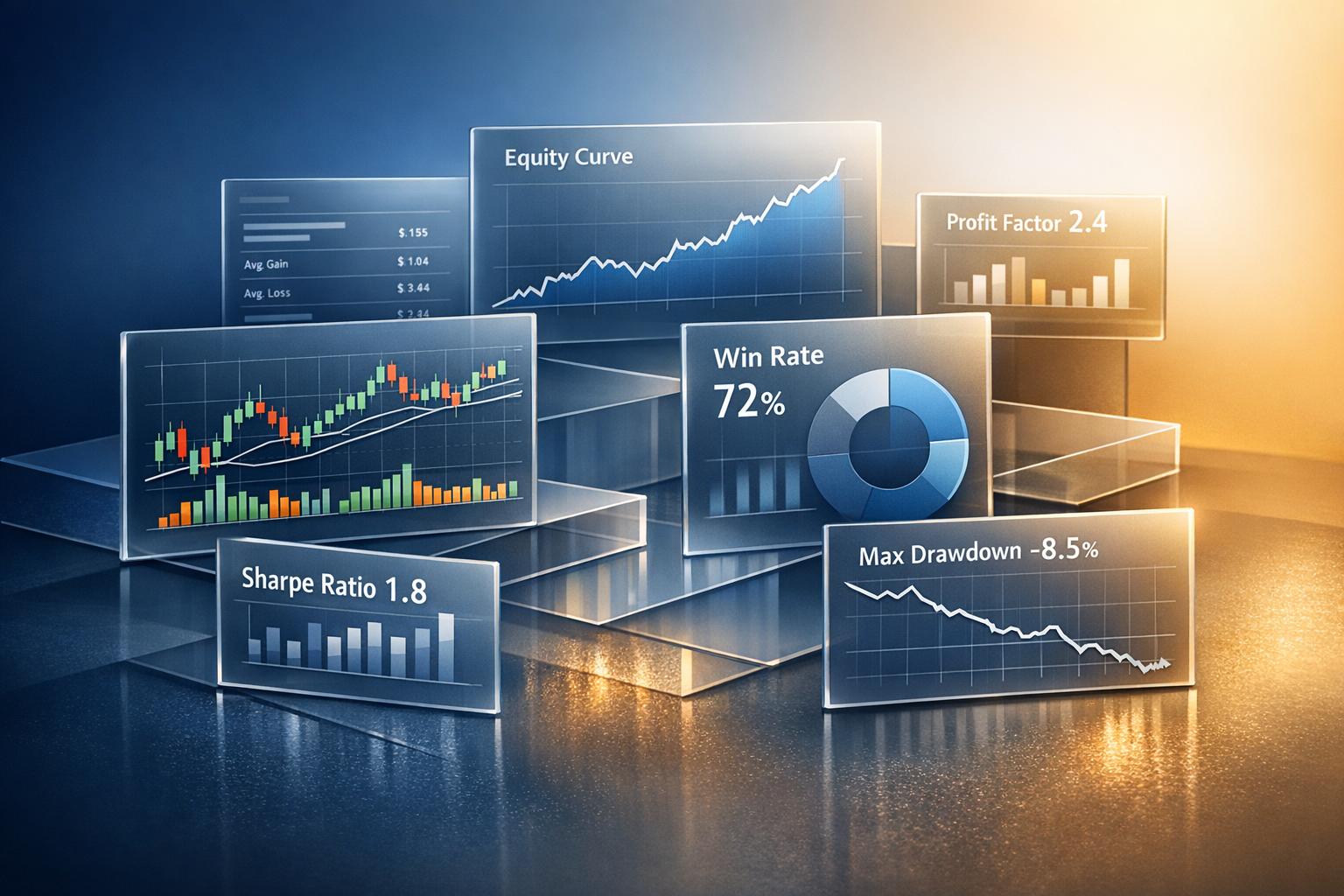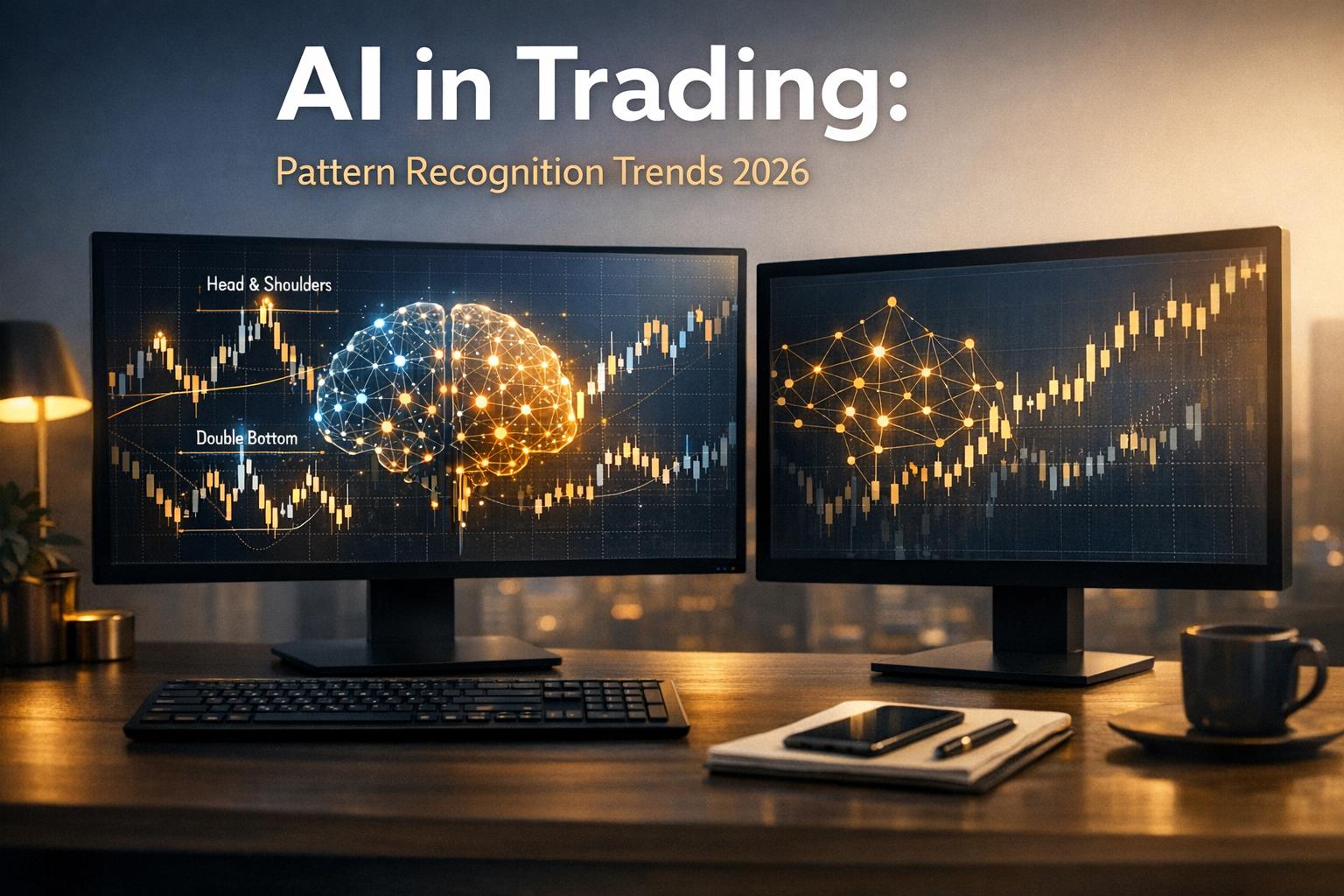
AI-driven pattern recognition has transformed trading in 2026, making it faster, more precise, and accessible to more traders than ever before. Advanced systems now analyze complex data - like price trends, volume, sentiment, and even satellite imagery - in real time, identifying opportunities that were once impossible to detect manually. Here's what you need to know:
- Speed & Scale: AI analyzes thousands of securities and data points per second, far outpacing human capabilities. Models like CNNs achieve up to 88% accuracy in spotting chart patterns.
- Retail Access: Tools like StockioAI bring institutional-grade analysis to individual traders, bypassing the high costs of platforms like Bloomberg Terminals.
- Performance: AI systems boast win rates exceeding 85% in certain conditions, with average ROI of 22.1% for crypto, 15.8% for forex, and 12.4% for equities.
- Risk Management: Automated stop-loss and take-profit systems reduce emotional trading errors, ensuring disciplined execution.
- Future Trends: Quantum computing, real-time sentiment analysis, and federated learning are set to further refine AI's role in trading.
AI is no longer a luxury for elite hedge funds - it's now a critical tool for anyone looking to navigate dynamic financial markets effectively.

I trained an AI Model to Detect Trading Candlesticks (from scratch using ViTs)
How AI Pattern Recognition Works in Trading
AI pattern recognition in trading hinges on neural networks that sift through enormous streams of market data in real time. Techniques like Long Short-Term Memory (LSTM) networks are used to track long-term price trends, while Convolutional Neural Networks (CNNs) analyze chart images to spot visual patterns such as triangles or head-and-shoulders formations [3].
Modern platforms can process over 60 real-time data points every second to generate trading signals [2]. These systems don't just rely on price data - they also integrate other factors like volume delta, volatility indicators such as Average True Range (ATR), and momentum oscillators like RSI. This combination helps reduce false signals [6]. AI-driven strategies have shown win rates exceeding 85% [8], signaling a shift from manual chart reading to automated, precision-driven trading.
"AI fundamentally transforms pattern identification by overcoming human limitations... Machine learning algorithms can analyze thousands of data points across multiple timeframes without fatigue or bias." – PageOn.ai [3]
From Manual Chart Analysis to Automated Detection
In the past, manual chart analysis was slow and reactive. AI has changed that, enabling instant detection of chart patterns. Take July 2025, for example: Tickeron's High-Frequency Multi-Ticker AI Agent achieved an annualized return of +273% by diversifying across nine high-liquidity tickers like AAPL, NVDA, and TSLA. It combined real-time pattern recognition with automated risk management to handle up to 10 open positions at once [8].
Unlike older rule-based systems that relied on rigid definitions, deep learning models can identify intricate, hidden patterns [3] [6]. These systems now recognize complex "nested" patterns and harmonic formations based on precise Fibonacci ratios [3].
By 2026, no-code automation platforms have emerged, allowing traders to build pattern-based strategies using natural language prompts instead of complex programming [11]. This shift has made sophisticated trading tools accessible to retail traders, eliminating the need for teams of quantitative analysts. These platforms not only speed up detection but also improve decision-making accuracy.
Main Advantages of AI Pattern Recognition
AI pattern recognition offers unmatched speed and precision. While a human analyst might review around 20 charts in an hour, AI systems can analyze thousands of securities across multiple timeframes in the same period. In a 10-year historical backtest, one AI model achieved 85% accuracy and 80% precision in forecasting major market moves [7]. Success rates vary across market conditions: 82% in trending markets, 64% in volatile markets, and 58% in ranging markets [3].
Another key advantage is emotion-free execution. AI systems wait for patterns to fully form - such as a neckline or trendline break - before issuing a signal [10] [6]. For instance, automated double bottom reversal strategies with volume filters have shown a 62% win rate in backtests, cutting false signals by 23% compared to manual analysis without filters [6].
Natural Language Processing (NLP) further enhances pattern recognition by analyzing real-time sentiment from news, social media, and earnings reports. This context adds depth to technical patterns. Platforms like StockioAI exemplify this approach, delivering signals with 80–90% accuracy by blending traditional technical analysis with sentiment insights [3].
| Algorithm Type | Accuracy in Pattern Detection | Primary Use Case |
|---|---|---|
| ARIMA | 65% | Trend detection and time-series forecasting [3] |
| Random Forest | 72% | Feature importance in multi-factor models [3] |
| LSTM (Neural Network) | 84% | Capturing long-term dependencies in price [3] |
| CNN (Computer Vision) | 88% | Identifying visual geometric chart patterns [3] |
The financial benefits of AI-driven pattern recognition are clear. Average ROI for AI-detected patterns stands at 22.1% for Crypto, 15.8% for Forex, and 12.4% for Equities [3]. With the global AI trading market valued at $11.2 billion in 2024 and projected to hit $33.45 billion by 2030 [9], both institutional and retail traders are increasingly embracing these advanced tools.
AI Technologies Behind Pattern Recognition
Modern pattern recognition thrives on the interplay of advanced AI technologies. Machine learning algorithms like Random Forests and Support Vector Machines (SVM) are key players, helping classify market regimes and spot recurring patterns in historical data [3]. Meanwhile, deep learning models such as Long Short-Term Memory (LSTM) networks and Convolutional Neural Networks (CNN) excel at identifying intricate visual patterns [3][2].
Natural Language Processing (NLP) adds another layer of insight by scanning news feeds, social media, and earnings calls to gauge sentiment [3][13]. This sentiment analysis helps traders assess whether a technical breakout has underlying support from fundamental factors. At the same time, reinforcement learning drives adaptive trading agents, allowing them to continuously refine strategies in response to changing market conditions [9].
By 2026, generative AI and Large Language Models (LLMs) are being used to simulate market scenarios, providing a robust framework for stress-testing strategies [3][9]. Additionally, K-Nearest Neighbors (KNN) algorithms are employed to identify historical parallels, helping to reduce noise in data analysis [12].
These technologies work together within a structured system. At the core is a multi-layered stack: the data layer gathers market and alternative data, the processing layer powers neural networks and NLP, the analysis layer handles pattern recognition and sentiment analysis, and the decision layer generates actionable signals and optimizes execution [3]. This layered approach ensures both speed and adaptability in pattern detection. The following sections explore how historical data and real-time adjustments enhance these models further.
Machine Learning and Historical Data Analysis
Supervised learning models rely on vast amounts of historical data to understand market behavior. For example, LSTM networks use lagged feature engineering, which shifts historical price data to uncover long-term, non-linear dependencies [15]. This enables the system to "remember" price patterns from weeks or even months ago when analyzing current trends.
The performance of these models varies depending on the algorithm. CNNs, for instance, achieve a 92% accuracy rate in identifying visual chart patterns, while LSTMs reach 88% for time-series forecasting. Random Forests score 84% in feature importance analysis, SVMs hit 81% in market regime detection, and ARIMA models achieve 76% for basic trend detection [3].
However, overfitting remains a persistent issue - models that perform well on historical data often struggle in new, unfamiliar conditions [14]. To counter this, ensemble learning techniques combine multiple models, such as Random Forests and Gradient Boosting, to "vote" on the validity of patterns. This approach has reduced false positives by 30% and improved overall detection accuracy by 18% [16]. These strategies form a solid foundation for real-time adaptability, ensuring consistent performance even in unpredictable market scenarios.
Real-Time Adaptation During Market Volatility
AI systems go beyond historical analysis by adapting dynamically to real-time market conditions, especially during periods of heightened volatility. Static algorithms often fail in such scenarios, but modern AI leverages regime-switching models and Bayesian inference to update probability estimates as new data streams in. This allows for quick adjustments during sudden market shifts, such as volatility spikes or flash crashes [3].
Deep stochastic filters are particularly effective in handling nonstationarity - when market characteristics like correlations and distributions change unexpectedly. These advanced models adapt to such shifts better than traditional tools, which often falter under these conditions [4]. Reinforcement learning agents further enhance adaptability by developing cost-aware hedging strategies that account for factors like slippage and liquidity constraints [4][9].
Differential deep learning adds another layer of stability by training on both prices and their sensitivities (Greeks), providing more reliable risk measures during rapid market swings [4].
"Neural surrogates make pricing and Greeks real-time. Train networks on prices and sensitivities to recalibrate volatility surfaces in milliseconds" – Paul Bilokon, PhD, and Joseph Simonian, PhD, CFA Institute [4]
This near-instant recalibration is crucial when patterns appear and disappear within seconds.
Adaptive weighting is another key feature, allowing AI systems to adjust the importance of various indicators as market conditions change. For instance, during periods of high volatility, the system might prioritize volume and Average True Range (ATR) over momentum oscillators like the Relative Strength Index (RSI) [16][3]. Multi-resolution ensembles, which combine data from different timeframes, have shown an 8% improvement in market prediction accuracy compared to single models [16]. Additionally, uncertainty-based metrics in these models have helped reduce portfolio drawdowns by 20% during volatile periods [16].
In controlled financial tests, XGBoost algorithms have outperformed traditional ARIMA models, achieving a 23.7% reduction in prediction errors [16]. This demonstrates the effectiveness of advanced AI techniques in navigating the complexities of modern financial markets.
AI Pattern Recognition Performance in 2026
Case Studies of AI-Driven Trading Results
In 2025 and 2026, real-world tests highlighted that even flawlessly executed AI systems could produce profit and loss patterns with notable numerical variations. These tests provided a bridge between theoretical progress and tangible trading outcomes.
One striking example comes from the I Know First AI algorithm's "Aggressive Stocks Forecast", which, between March 3 and April 3, 2025, delivered an average return of 38.91% on short positions. Key predictions included MULN (-96.91%), WKHS (-75.83%), and WHLR (-73.66%). During the same period, the S&P 500 dropped by 9.37%, meaning the AI strategy outpaced the index by an impressive 48.28% [22].
Another standout was the "Increase Alpha" deep-learning framework, which analyzed over 800 U.S. equities through daily directional signals during the third quarter of 2025. This framework achieved a Sharpe ratio above 2.5 and a maximum drawdown of around 3%, delivering steady, low-risk returns with minimal correlation to the S&P 500 [21].
In November 2025, researchers Haofei Yu, Fenghai Li, and Jiaxuan You conducted a 50-day live evaluation of 21 Large Language Models under real trading conditions. Interestingly, they discovered that high general reasoning scores didn’t guarantee better trading outcomes.
"These findings expose a gap between static evaluation and real-world competence, motivating benchmarks that test sequential decision making and consistency under live uncertainty" [17].
Their work emphasized the growing importance of agent frameworks that incorporate memory, tool-use, and multi-agent debate to improve the dependability of AI-generated trading signals [18][19].
Performance Data on Major Market Indices
Beyond individual case studies, AI models have consistently demonstrated their strength across major market indices, showcasing their ability to thrive in volatile conditions.
For instance, transformer-based models like PatchTST have excelled in short-term forecasts (96–336 days) for major indices, achieving the lowest Mean Squared Error (MSE) for 192-day and 336-day horizons. Over longer 720-day periods, simpler architectures like Dlinear have proven more stable, delivering cumulative returns of 139.63% [20].
"PatchTST model demonstrates superior performance for series lengths of 192 and 336 days, achieving the lowest MSE values among all models" [20].
AI systems have shown strong alignment with market trends, correlating 90% with 40-day trends and 80% with 200-day trends for ETFs tracking indices like SPY and QQQ [24]. These models have even detected institutional trading patterns linked to economic reports - such as inflation data and interest rate decisions - before the broader market reacts [24]. For example, on January 2, 2026, Tickeron's A.I.dvisor identified a bullish trend in Palantir Technologies (PLTR) using the Aroon Indicator, analyzing 303 historical patterns to predict a likely upward move [25].
Specialized AI agents focusing on 15-minute strategies for top tech stocks and ETFs reported annualized returns as high as 207% by July 2025. Diversified portfolios of eight major tickers, including META, NVDA, and AAPL, achieved a 36% annualized return during the same year [25]. However, research indicates that LLM-based strategies tend to be overly cautious in bull markets and overly aggressive in bear markets, highlighting the need for better risk controls tailored to market conditions [23].
These advancements are reshaping AI-driven trading, with platforms like StockioAI utilizing cutting-edge pattern recognition to provide real-time, actionable insights. Such tools are empowering traders to navigate the complexities of today’s volatile markets with greater precision and confidence.
Combining AI with Technical Analysis
Cross-Signal Validation for Higher Accuracy
AI pattern recognition doesn’t aim to replace traditional technical indicators - it’s here to enhance them. Modern trading systems take established tools like RSI, MACD, and moving averages to the next level by integrating AI’s ability to spot intricate patterns. This creates a more robust confirmation process, helping traders sift through false signals with greater precision.
Unlike rigid rule-based systems, AI models such as LSTM adapt dynamically to market conditions. For instance, during periods of high volatility, these systems may prioritize indicators like ATR to fine-tune risk parameters. On the other hand, in steady, trending markets, long-term indicators like the MA120 might take center stage to confirm the overall market direction [26]. This layered approach ensures that each type of indicator plays its role: trend indicators point to market direction, momentum tools highlight overbought or oversold conditions, volatility measures track market swings, and support/resistance levels (like 30-day highs and lows) define logical price boundaries [26]. Together, these elements not only improve signal accuracy but also help traders manage risk more effectively.
AI also excels in market regime classification - determining whether the market is trending, ranging, volatile, or quiet. By identifying these conditions, AI systems can adjust signal generation accordingly. For example, they help traders avoid acting on bullish signals in bearish trends or misinterpreting reversal patterns during strong momentum phases. This cross-validation of signals ties together AI’s capabilities into a cohesive framework for smarter trading decisions.
Examples of Multi-Indicator Combinations
The benefits of this enhanced confirmation process come to life through practical examples. One notable case is Jung-Hua Liu’s volatility-adjusted grid trading strategy, which combines multiple indicators for refined decision-making. This strategy uses the MA120 to establish market bias, RSI for mean-reversion confirmations, ATR for adjusting risk, and 30-day highs/lows to define grid boundaries [26]. During times of heightened volatility, when ATR spikes, the AI system automatically expands the grid range and reduces order sizes to manage risk.
"ATR has increased significantly, indicating higher volatility; the grid range is expanded and order size reduced to manage risk." – Jung-Hua Liu [26]
Another example involves trend-biased pattern recognition. Here, traders configure AI systems to only accept bullish reversal patterns when the price is above the 120-day moving average (MA120) and bearish patterns when it’s below [26]. This ensures that pattern signals align with the prevailing trend, reducing the likelihood of acting on conflicting signals.
Beyond technical indicators, AI systems increasingly incorporate Natural Language Processing (NLP) to analyze news sentiment and social media activity alongside chart patterns. For example, if the system detects a bullish chart pattern but NLP analysis reveals overwhelmingly negative sentiment, it flags the setup as high-risk [3][9]. This integration of sentiment analysis adds an extra layer of caution to trading decisions.
In 2024, the global AI trading market was valued at $11.2 billion and is projected to grow to $33.45 billion by 2030. Traders leveraging algorithmic tools that combine AI with technical analysis have reported an average 10% boost in productivity [9].
AI for Risk Management and Trade Automation
Automated Stop-Loss and Take-Profit Levels
AI is transforming how traders approach risk management by automating critical decisions like stop-loss and take-profit levels. By analyzing historical volatility, current market conditions, and specific trade details, AI systems can set these levels automatically. These platforms also monitor drawdowns, comparing them to historical data, and suggest reducing position sizes after a series of losses. They even simulate various risk-reward scenarios to find effective exit strategies tailored to trending, ranging, or highly volatile markets [28].
On top of that, AI uses natural language processing to analyze news feeds and social media sentiment. When negative headlines or concerning trends appear, the system can flag a "high-risk mode", alerting users to potential dangers [3]. For StockioAI users, these tools not only protect capital but also help lock in profits. By automating these processes, traders can avoid human errors, ensuring decisions are made without bias and with consistent precision.
Removing Emotional Bias from Trading
AI's ability to eliminate emotional decision-making is another game-changer for traders. Fear, greed, and hesitation often lead to costly mistakes, but AI executes strategies with none of these distractions [27]. Advanced algorithms monitor deviations from a trader's strategy, catching moments of hesitation or loss of confidence that could derail success [28].
In fact, by 2025, over 50% of surveyed financial firms identified AI as a critical tool for removing guesswork and emotional bias from trading [5]. AI systems also provide round-the-clock discipline by continuously tracking open trades and adjusting positions based on real-time market volatility. This ensures strategies are executed consistently, no matter the time or market conditions, giving traders the edge they need to stay ahead.
What's Next for AI in Trading
Improved Prediction Accuracy
Advancements in AI are taking prediction accuracy in trading to a whole new level. By integrating multiple AI models into unified systems, trading platforms are moving beyond isolated models to what some call "AI factories." These setups combine technology platforms, vast datasets, and pre-built algorithms to supercharge AI deployment on a large scale. The focus is shifting from individual AI models to how these systems are orchestrated.
"In 2026, the competition won't be on the AI models, but on the systems. The model itself is not going to be the main differentiator." – Gabe Goodhart, Chief Architect of AI Open Innovation at IBM [29]
A key player in this evolution is quantum computing. For instance, in 2025, Goldman Sachs leveraged quantum annealing to cut bond risk by 40%, solving optimization problems 100 times faster than traditional approaches [1]. By 2026, quantum computers are expected to outperform classical ones in solving complex problems, marking a major milestone in AI-driven trading.
"2026 will mark the first time a quantum computer will be able to outperform a classical computer - the point at which a quantum computer can solve a problem better than all classical-only methods." – Jamie Garcia, Director of Strategic Growth & Quantum Partnerships at IBM [29]
AI systems are also becoming smarter in how they interpret patterns. Techniques like Bayesian inference and Monte Carlo simulations now assign confidence scores to detected trends, giving traders the ability to adjust their strategies based on both market volatility and the clarity of the signals. For platforms like StockioAI, which already boasts signal accuracy rates of 80–90%, these advancements promise even greater reliability across diverse market scenarios. But technical precision is just one piece of the puzzle - understanding market sentiment is becoming equally vital.
Adding Real-Time Market Sentiment Analysis
The future of AI in trading lies in combining technical analysis with real-time market sentiment. Emerging platforms are integrating unconventional data sources, such as satellite imagery, IoT metrics, and mobile payment trends, to provide richer context for market movements [3][1]. These tools add depth to the technical patterns traders rely on, offering a more comprehensive view of market dynamics.
Sentiment analysis, in particular, is proving to be a game-changer. Research shows that platforms like X (formerly Twitter) can predict market trends with up to 87% accuracy as far as six days in advance [31]. Natural language processing (NLP) has evolved beyond simple polarity scoring to identify emotions and themes in financial news and social media, offering traders a sharper edge [3].
The rise of autonomous agents is shaping what some call the "New Quant" paradigm. These AI-driven agents combine layered memory and advanced tools to handle tasks like research, backtesting, and execution seamlessly [18].
"Enterprise AI adoption will reach an inflection point in 2026, transitioning from board-level conversations and pilot-stage experimentation to measurable enterprise ROI gains." – Matt Hedberg, Head of Global TIMT Research at RBC Capital Markets [30]
With AI expected to manage nearly 89% of global trading volume by 2025 and the market projected to hit $35 billion by 2030 [1], integrating sentiment analysis is becoming a must-have for trading strategies.
Technologies like federated learning are also making waves. By allowing models to learn from distributed datasets without centralizing sensitive information, federated learning enhances collective insights while protecting proprietary data [3]. Meanwhile, neuromorphic computing - brain-inspired systems that consume far less energy - could make advanced AI tools more accessible by enabling them to run efficiently on edge devices [3]. These developments promise to democratize sophisticated trading tools, putting them within reach of more market participants.
Conclusion
AI-driven pattern recognition has become a central force in the trading world of 2026. With AI now responsible for managing 89% of global trading volume and the market expected to grow to $35 billion by 2030 [1], traders are leveraging technology that can process thousands of data points across various timeframes - all without the limitations of human fatigue.
This leap in technology has reshaped not just how data is analyzed, but also how trading strategies are formed. The modern approach blends AI's speed and precision with the nuanced judgment of human traders [3]. This combination is especially important during unpredictable "black swan" events or sudden market shifts that AI, reliant on historical data, may struggle to anticipate.
"Differentiation will shift from technical firepower to human judgment, insight, and the ability to build meaningful relationships" – David Fubini, Harvard Business School [34]
Platforms like StockioAI are now making institutional-grade tools accessible to retail traders. These tools include automated risk management systems, multi-timeframe analysis, and signal accuracy rates ranging from 80% to 90%. What was once exclusive to quantitative hedge funds is now available to individual traders.
To thrive in this environment, traders need a "change fitness" mindset - a willingness to critically evaluate AI-driven insights. Start by using paper trading to test AI signal reliability [32][33]. Let AI handle continuous market monitoring and identify preliminary patterns, but always validate these signals against real-time news and broader market sentiment.
As quantum computing and real-time sentiment analysis continue to evolve, the collaboration between AI and human expertise will remain the cornerstone of trading success.
FAQs
How does AI enhance risk management in trading?
AI plays a key role in improving risk management in trading by processing real-time data like market trends, price fluctuations, and news sentiment. This capability enables the adjustment of trading strategies on the fly, allowing traders to fine-tune stop-loss levels and handle portfolio risks with greater precision.
By eliminating emotional biases and delivering insights grounded in data, AI brings a higher level of accuracy and consistency to risk management. This helps traders navigate complex market environments with more confidence and make better-informed decisions.
How does sentiment analysis enhance AI-driven trading strategies?
Sentiment analysis plays a key role in AI-driven trading by examining market mood and investor sentiment through unstructured data sources like news articles, social media posts, and financial reports. By processing this information, AI systems add a layer of insight that goes beyond traditional technical indicators.
This approach can uncover potential market shifts or trend continuations that might not be visible in price charts alone. When paired with tools like reinforcement learning algorithms, sentiment signals allow trading models to adjust in real time to changing market dynamics. This gives traders the ability to make decisions that are both timely and well-informed.
How easy is it for individual traders to use AI tools for trading?
AI trading tools have become more accessible than ever, giving individual traders the chance to use advanced technology that was once exclusive to large institutions. Platforms like StockioAI now offer features such as real-time market signals, AI-powered pattern detection, and risk management tools, simplifying the decision-making process for traders of all skill levels.
With budget-friendly subscription plans and minimal technical know-how required, these tools allow individuals to analyze markets, spot opportunities, and handle risks with greater confidence. As AI continues to advance, these tools are expected to become even easier to use, helping individual traders keep up in an increasingly complex market landscape.