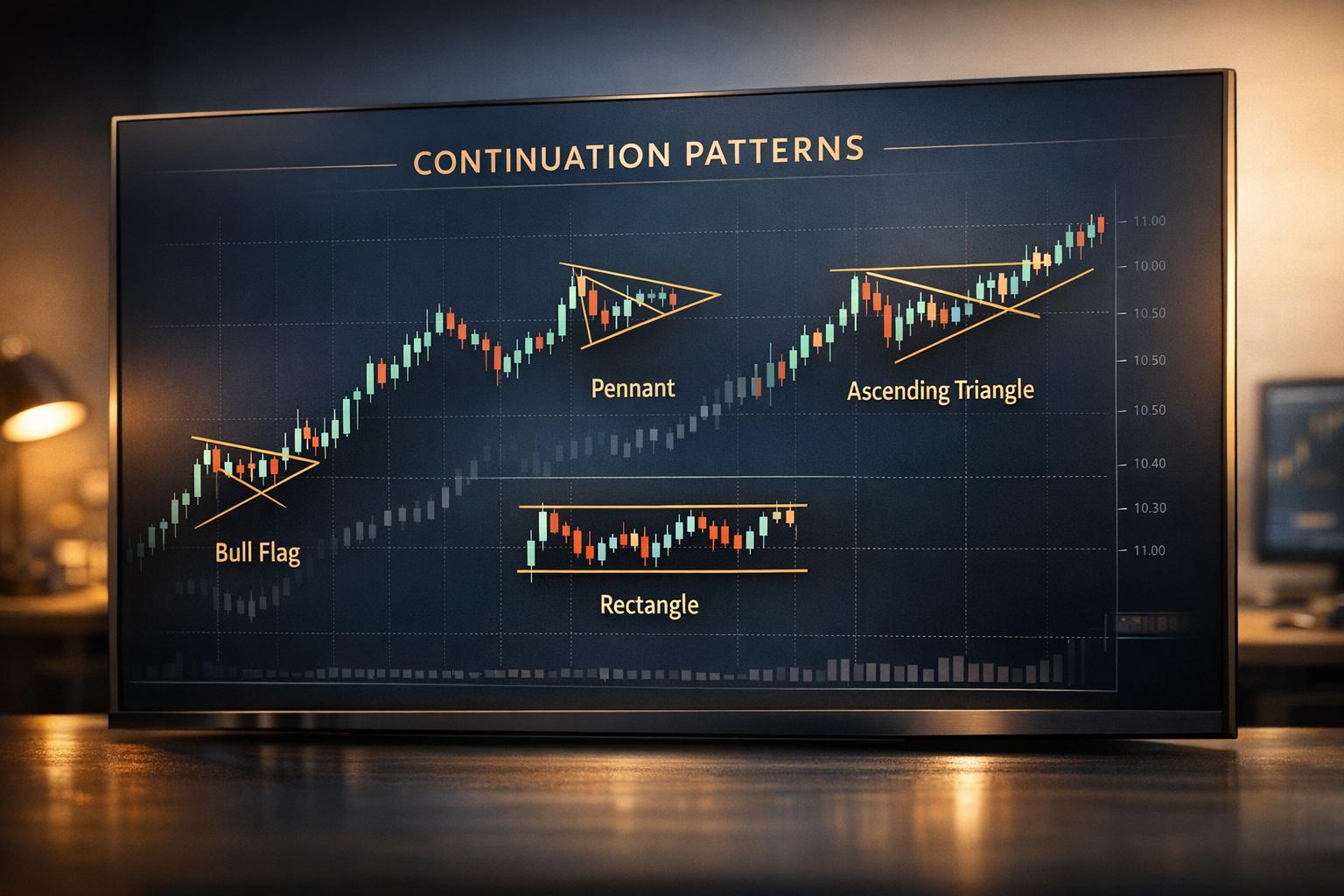
In crypto trading, having a clear strategy is essential to manage risks and make informed decisions. Here are seven effective strategies tailored to different trading styles and risk levels:
-
Day Trading: Focus on short-term price movements by opening and closing trades within the same day. Requires 4–8 hours of daily monitoring and comes with high risk due to crypto volatility.
-
Swing Trading: Target medium-term trends over a few days to weeks. Ideal for those with limited time, needing only 1–2 hours daily for analysis. Risk level is moderate.
-
Scalping: Execute multiple trades daily to profit from small price changes. Demands constant attention (2–4 hours or more) and carries high risk due to frequent trades and potential fees.
-
Trend Following & Momentum Trading: Ride sustained market trends, holding positions for days to months. Time commitment is moderate, with 30–90 minutes daily for review.
-
Range Trading: Buy at support and sell at resistance in sideways markets. Requires minimal daily monitoring (1–2 hours) and offers medium risk.
-
Breakout Trading: Enter trades when prices move beyond consolidation zones. Time commitment varies based on timeframe, and the strategy carries medium-to-high risk.
-
Dollar-Cost Averaging (DCA): Invest a fixed amount regularly over time, regardless of price. Best for long-term investors with minimal effort (15–30 minutes monthly).
Key Takeaways:
- Risk Tolerance: Match the strategy to your comfort with risk.
- Time Commitment: Some strategies, like day trading, demand full-time focus, while DCA is more passive.
- AI Tools: Platforms like StockioAI assist with real-time analysis, pattern recognition, and risk management, making strategies more efficient.
Choose the strategy that aligns with your goals, schedule, and risk appetite.

Crypto Trading Strategies Explained
| Full Beginner-Friendly Tutorial | Wealth Secret
1. Day Trading
Day trading is one of the go-to strategies for crypto traders looking to take advantage of fast market movements. The idea is simple: open and close all positions within the same trading day, avoiding the risks of holding overnight. In the highly volatile world of crypto, where coins like Bitcoin or Ethereum can swing 5–10% in a single session, this strategy thrives on short-term price changes. For instance, you might buy Bitcoin at $60,000 after it breaks through a resistance level on a 15-minute chart with strong trading volume. If the price rises to $61,200, you could lock in a 2% gain. But if it dips to $59,700, you’d cut your losses and exit the trade. [4]
Time Commitment Required
Day trading isn’t for the casual trader - it demands full attention. Plan to spend 4–8 hours daily monitoring charts, analyzing trends, and executing trades. Most day traders stick to highly liquid pairs like BTC/USD or ETH/USD to ensure smooth transactions and avoid missing opportunities. This is not a side hustle; it’s a full-time commitment. [2][4]
Risk Level and Volatility Exposure
It’s no secret that day trading comes with high risk. Crypto’s notorious volatility, with price swings of 5–10% in mere minutes, can either work in your favor or wipe out your account just as quickly. Without proper risk management, losses can escalate fast. Studies from traditional markets reveal that 70–80% of day traders lose money over time, and crypto’s 24/7 trading environment only adds to the challenge. Emotional discipline is key - succumbing to FOMO (fear of missing out) or revenge trading often leads to overtrading and compounded losses. [2][4]
Holding Period for Trades
Day traders aim for quick turnovers, holding positions for anywhere from a few minutes to several hours. All trades are closed before the trading session ends to eliminate overnight risk. For example, a scalp trade might last 5–30 minutes on a 1-minute chart, while a momentum trade could stretch up to 4 hours. The goal is to capitalize on short bursts of movement without lingering in the market longer than necessary. [2][4]
AI-Powered Tools Integration
In a game where speed and accuracy are everything, AI-powered tools have become indispensable for day traders. Platforms like StockioAI analyze over 60 real-time data points per second, including sentiment trends and large-scale trades by whales. These tools provide Buy, Sell, and Hold signals with suggested entry prices and confidence scores, streamlining decision-making. Interactive charts highlight critical elements like breakout patterns, support and resistance levels, and momentum shifts, saving traders from hours of manual analysis.
StockioAI also includes risk calculators that automatically determine position sizes and recommend stop-loss levels based on your account size and risk tolerance. This makes it easier to stick to the critical 1–2% risk rule, even during fast-moving markets. By automating pattern recognition and sending real-time alerts, tools like these allow traders to focus on execution while maintaining efficiency and precision. [1][8]
2. Swing Trading
Swing trading strikes a balance between the rapid pace of day trading and the patience required for long-term investing. This strategy focuses on capturing price movements over several days to a few weeks, allowing traders to ride medium-term trends without being glued to their screens. For instance, you might buy Solana at $150 after a confirmed bounce and sell it around $200 within 10 days, netting a roughly 33% gain. It’s a middle ground that combines the immediacy of shorter-term trading with the steadiness of a longer-term approach, making it appealing for many traders [7].
Holding Period for Trades
Swing trades typically span a few days to several weeks, giving trends enough time to play out while avoiding the noise of intraday price swings. Unlike the minute-by-minute focus of day trading, swing trading takes advantage of multi-day trends to capture meaningful price moves. Traders often hold positions overnight and through weekends to benefit from the crypto market’s 24/7 activity. For example, you might hold Ethereum from $3,000 support to $3,500 resistance over two weeks, using trailing stops to lock in profits along the way [4][7].
Time Commitment Required
Swing trading demands far less time than day trading. Most swing traders spend about 1–2 hours daily reviewing charts and managing their positions. This makes it a practical option for those with full-time jobs who still want to actively participate in the market. By focusing on 4-hour and daily charts, traders can monitor their setups and adjust strategies without needing to be constantly online [4][6].
Risk Level and Volatility Exposure
While swing trading offers the potential for significant gains, it carries a medium level of risk due to the inherent volatility of cryptocurrencies. Holding positions overnight or over weekends exposes traders to potential price gaps or unexpected news that could reverse trends. To manage this risk, it’s crucial to set stop-loss orders that account for swing-specific price movements and limit risk on any single trade to no more than 2% of your total capital [4][5].
AI-Powered Tools Integration
AI tools have become game-changers for swing traders, helping to streamline decision-making and optimize strategies for medium-term trends. Platforms like StockioAI are designed specifically for this purpose, offering real-time analysis tailored to 4-hour and daily charts. These tools identify key patterns such as Fibonacci retracements, moving average crossovers, and crucial support or resistance levels. StockioAI provides actionable Long, Short, or Hold recommendations with targeted entry prices and confidence scores. Interactive charting features highlight momentum shifts and critical price zones, while built-in risk calculators help you size positions within your 2% risk threshold. Real-time alerts notify you when prices hit your pre-planned entry points, so you can act without constantly monitoring the market [1].
3. Scalping
Scalping is the fastest-paced strategy in crypto trading. Traders using this method execute dozens of trades daily, aiming to profit from tiny price movements - just a few basis points per trade. Unlike day traders, who might hold positions for minutes or hours to capture larger trends, scalpers operate on a much shorter timeline. They open and close positions within seconds to a few minutes, prioritizing quick exits over waiting for significant intraday moves. For instance, a scalper might repeatedly target a $2–$5 gain on Bitcoin when it’s trading around $40,000 [7].
Holding Period for Trades
Scalping positions are incredibly short-lived, typically lasting from a few seconds to a few minutes [7][4]. Because of this ultra-brief timeframe, scalpers rely on market and limit orders placed directly into the order book to ensure rapid execution and minimal spreads. Most scalpers stick to high-liquidity trading pairs like BTC/USDT and ETH/USDT, where deeper order books make it easier to enter and exit trades quickly without major slippage [2][7].
Time Commitment Required
Scalping demands intense focus and constant screen time, typically for 2–4 hours during peak liquidity windows. These periods often coincide with overlapping U.S. and European trading hours, roughly 8:00 a.m.–12:00 p.m. ET and 7:00 p.m.–11:00 p.m. ET [7][2]. More experienced scalpers may dedicate 6–10 hours a day to trading, breaking their sessions into smaller blocks to avoid burnout. Missing even a few seconds of action can disrupt the strategy, making sustained attention crucial [7][4].
Risk Level and Volatility Exposure
Even though scalping focuses on small price movements, it carries substantial risks due to the high volume of trades, frequent use of leverage, and constant exposure to sudden price fluctuations. While individual trades may only risk 0.25–0.5% of account equity, the cumulative effect of hundreds of trades per week magnifies the impact of execution errors, outages, and trading fees [7][4]. For example, fees as low as 0.10–0.20% per side can completely erode profits on trades targeting 0.20–0.40% moves [7].
To manage these risks, successful scalpers implement strict controls. They cap risk per trade (usually 0.25–0.5% of account equity), set daily loss limits (typically 2–3% of total equity), and pause trading after a set number of consecutive losses (often 3–5 trades) [2][7]. These measures are critical for staying disciplined in such a fast-paced environment.
AI-Powered Tools Integration
Given the rapid pace and complexity of scalping, AI-powered tools have become essential for many traders. Platforms like StockioAI analyze over 60 real-time data points per second, including sentiment shifts and large market movements, to provide actionable insights on 1-minute and 5-minute charts [1]. These tools help scalpers pinpoint optimal entry and exit points with precision, offering confidence scores for each trade setup.
Additionally, AI-enhanced pattern recognition scans multiple trading pairs simultaneously, identifying micro-trends, overbought or oversold conditions, and unusual order-flow activity [2]. Built-in risk calculators further assist by optimizing position sizes based on current market volatility and enforcing strict daily loss limits. Real-time alerts highlight only the most promising opportunities that align with pre-defined scalping criteria, reducing screen fatigue and helping traders maintain focus and discipline in this high-intensity trading style [2].
4. Trend Following and Momentum Trading
Trend following and momentum trading differ significantly from high-frequency strategies like scalping or day trading. Instead of focusing on small, frequent price changes, these approaches aim to capitalize on longer, sustained market movements. For instance, trend followers look for clear upward or downward trends - such as Bitcoin consistently trading above its 50-day and 200-day moving averages - and take positions based on these patterns [2][4]. Momentum traders, on the other hand, focus on assets showing strong price movements paired with rising volume and positive sentiment, entering trades once the momentum is confirmed [2].
Holding Period for Trades
The duration of trades in these strategies adapts to the strength and timeframe of the trend. Positions can be held for several hours to weeks, depending on the market's momentum [2][4]. Traders working with 4-hour or daily charts may hold positions for days or even weeks as long as the trend remains intact. In contrast, those using shorter timeframes, like 15-minute or 1-hour charts, might only hold positions for a few hours to a couple of days.
Time Commitment Required
Trend and momentum trading require less constant attention compared to scalping. Traders using 4-hour or daily charts typically spend 30–90 minutes each day reviewing charts, setting alerts, and adjusting orders [4]. Since crypto markets operate 24/7, U.S. traders often rely on price alerts, conditional orders, and mobile apps to manage their trades while balancing a regular work schedule [2]. For those working with shorter intraday timeframes, such as 15-minute or 1-hour charts, more frequent check-ins may be necessary throughout the day. However, decision-making is still less demanding than the rapid pace of intraday scalping [2].
Risk Level and Volatility Exposure
These strategies involve moderate to high risk, especially in the volatile crypto market. While they can capture significant directional moves, they also expose traders to sudden reversals and sharp market swings [2][4]. To manage this risk, successful traders often cap their risk at 1–2% per trade using stop-loss orders [2][4][7]. They also avoid overexposure to a single asset, reduce leverage, diversify across major pairs like BTC/USD and ETH/USD, and take partial profits as trends progress.
AI-Powered Tools Integration
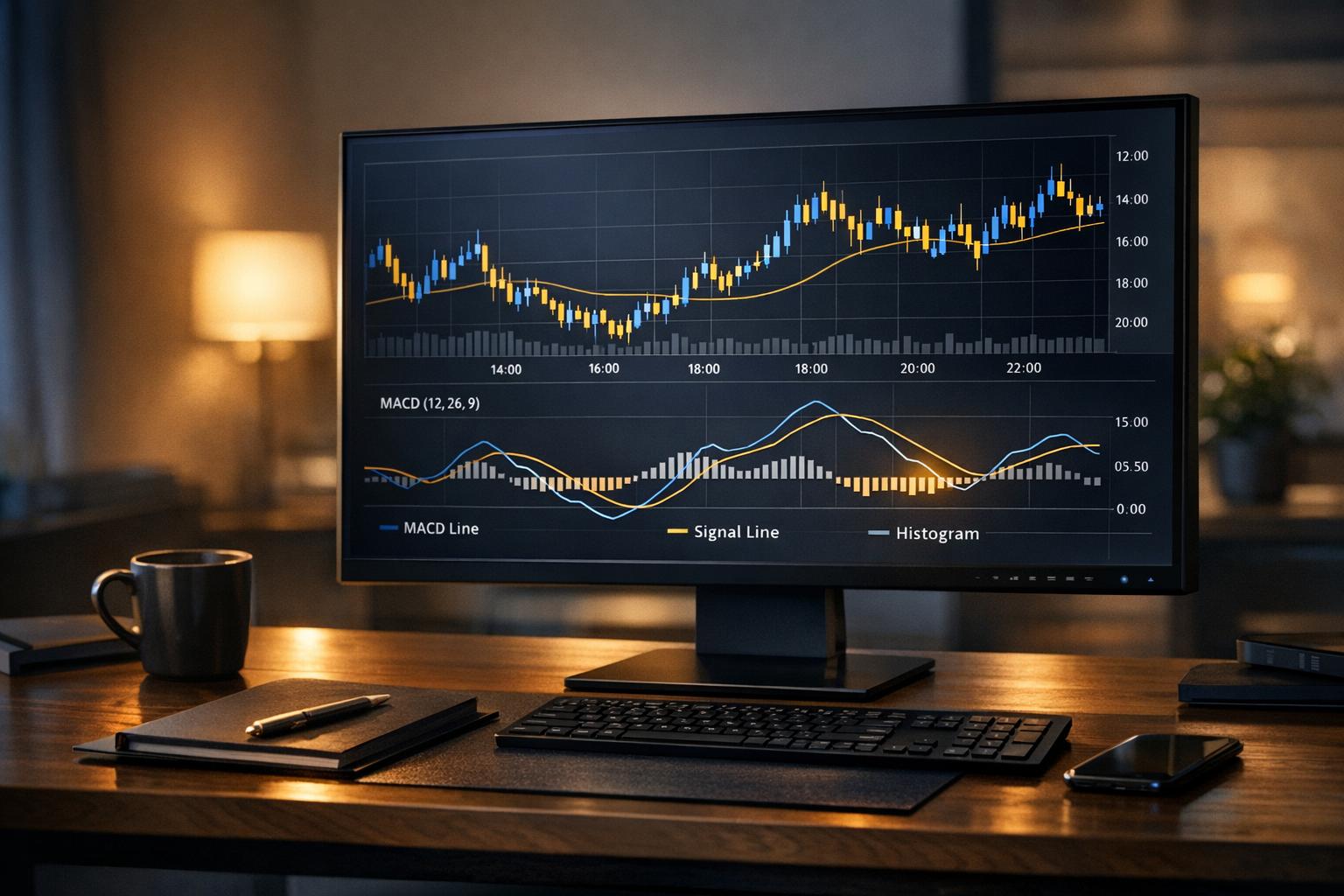
Advanced tools can significantly enhance trend and momentum trading by improving efficiency and accuracy. AI platforms like StockioAI simplify the process by scanning hundreds of crypto pairs for strong directional moves. StockioAI evaluates over 60 real-time data points, such as sentiment changes and whale trades, to provide precise Buy, Sell, and Hold signals [1]. Its interactive charts and AI-driven pattern recognition highlight key opportunities like breakouts and momentum surges that meet specific criteria. The platform also includes built-in risk calculators, allowing U.S. traders to size their positions in dollars and align each trade with a fixed percentage of account risk. Technical overlays like moving averages, RSI, and MACD further help validate AI signals against personal trading rules. While these tools save time and improve consistency, it’s crucial to define your own risk parameters instead of relying entirely on automated signals.
5. Range Trading
Range trading works best in markets that are moving sideways. The idea is simple: buy when the price hits support and sell when it approaches resistance. For example, if Bitcoin is fluctuating between $58,000 and $62,000, you might buy at $58,500 when the Relative Strength Index (RSI) drops below 30, sell near $61,800 for a 5.8% profit, and set a stop-loss at $57,500 to limit your risk to 1.5% [2][7]. Let’s break down the key elements of this strategy, including how long to hold positions, the time commitment involved, risk considerations, and how AI tools can enhance your trading.
Holding Period for Trades
Positions in range trading typically last anywhere from a few hours to a few days, depending on the width of the range and the timeframe you're analyzing [2][7]. For instance, if Bitcoin is trading in a range of $60,000 to $65,000 on a 4-hour chart, you might hold your position for 1–3 days until the price reaches the resistance level. During periods of stable consolidation, it’s possible to capitalize on multiple cycles within the same range by repeatedly buying near support and selling near resistance.
Time Commitment Required
This strategy is relatively low-maintenance, requiring about 1–2 hours of daily monitoring [2][4]. Unlike scalping, you don’t need to be glued to your screen all day. Most range traders focus on reviewing 1- to 4-hour charts during consolidation phases and set alerts for when prices approach key levels. This makes range trading a practical option for those who can only dedicate part of their day to the markets.
Risk Level and Volatility Exposure
Range trading comes with a medium level of risk but exposes you to less volatility compared to trend-following strategies [7][4]. By operating within clearly defined boundaries and using tight stop-loss orders (usually set 2–5% below support), you can limit your downside. That said, false breakouts are a common challenge, as prices can temporarily breach support or resistance levels, triggering your stop-loss before snapping back into the range. To manage risk effectively, keep each trade to 2% of your total capital.
AI-Powered Tools Integration
AI tools can take range trading to the next level. Platforms like StockioAI use advanced pattern recognition to automatically identify support and resistance zones, saving you from the hassle of manual charting. StockioAI processes more than 60 real-time data points per second to detect consolidation zones and generates Buy/Sell signals when prices approach these boundaries [1]. Its interactive charts highlight critical levels, and RSI alerts notify you when conditions are oversold (below 30) or overbought (above 70). The platform also features a built-in risk calculator to help you size your positions based on stop-loss distances, ensuring you stick to the 2% risk rule. These tools streamline your decision-making, so you can focus on executing your trades with confidence.
6. Breakout Trading
Breakout trading involves entering a position when the price moves decisively beyond a well-defined consolidation zone. Take Bitcoin, for example: if it has been trading sideways between $38,000 and $42,000, a breakout might occur when the price closes above $42,800 with strong volume - say, above the 20-day average. In such a scenario, you could set your stop-loss at $41,500 (inside the previous range) and aim for a profit target between $46,000 and $48,000, based on the $4,000 range it just broke out from [2]. The key here is confirmation. Look for a strong candle close and significant volume rather than reacting to a quick spike. Once confirmed, decide how long you'll hold the trade.
Holding Period for Trades
The duration of breakout trades can range from a few hours to a few weeks [2]. If you're working with intraday breakouts on shorter timeframes, like 5–30 minute charts, you'll likely close your positions the same day to avoid overnight risk - especially with highly volatile altcoins. On the other hand, breakouts on 4-hour or daily charts tend to last longer. You'll hold these trades until key indicators suggest the trend is weakening. For example, you might exit if the price dips back below the breakout level, moving averages cross against your position, or momentum indicators like RSI begin to diverge [4]. Many traders also scale out profits at predetermined levels (e.g., 1R, 2R, 3R) and move their stop-loss to breakeven, allowing part of the position to stay open in case the breakout evolves into a longer trend.
Time Commitment Required
Breakout trading on lower timeframes (5–15 minute charts) demands several hours of active monitoring, as breakouts can develop and fail quickly. This requires quick execution and constant attention [2]. If you prefer less screen time, focusing on 4-hour or daily charts is a better option. With these higher timeframes, you can manage trades with just 1–2 check-ins per day, usually timed around major U.S. trading sessions [4]. This approach is ideal for part-time traders who have a 9–5 job. Beginners are often advised to start with higher timeframes to avoid the noise and false signals common in shorter charts, while still benefiting from significant price moves when major levels break.
Risk Level and Volatility Exposure
Breakout trading comes with medium to high risk, as it targets moments when volatility is on the rise. While this can lead to quick profits, it also increases the chances of sharp reversals [2]. Common risks include false breakouts, where the price briefly moves beyond a level only to fall back into the range, and sudden reversals near obvious highs or lows. Slippage during fast moves - especially with thinly traded altcoins - can also be an issue. The crypto market’s 24/7 nature adds another layer of risk, as significant price swings can occur during low-liquidity hours, such as late at night in the U.S.
To manage these risks, stick to these guidelines:
- Limit your position size to 1–2% of your account equity per trade.
- Place your stop-loss inside the old range rather than right at the breakout level to avoid being stopped out prematurely.
- Focus on liquid trading pairs to minimize slippage.
- Prioritize breakouts that align with the trend on higher timeframes, rather than chasing every breakout [2][4].
AI-Powered Tools Integration
AI tools can make breakout trading more efficient. Platforms like StockioAI use advanced pattern recognition to scan thousands of crypto pairs in real time, identifying breakout setups such as ranges, triangles, and flags. These tools generate clear Buy, Sell, or Hold signals based on specific breakout criteria [1]. StockioAI, for instance, processes over 60 data points per second - including sentiment and whale activity - to pinpoint optimal entry points with precise timing, prices, and confidence scores [1]. Its interactive charts highlight key support, resistance, and pivot zones, helping traders spot potential breakout opportunities. Additionally, built-in risk calculators suggest position sizes and stop-loss levels tailored to your risk tolerance [1]. For traders with limited time, especially those juggling a 9–5 job, these AI alerts and dashboards allow you to catch quality breakouts without spending hours glued to the screen.
7. Dollar Cost Averaging (DCA) and Long-Term Investing
Dollar Cost Averaging (DCA) is a strategy where you invest a fixed amount - say, $200 every Friday at 10:00 a.m. ET - into cryptocurrency, regardless of its current price [4][6]. Over time, this method helps smooth out the impact of short-term price swings. It achieves this by automatically buying more coins when prices are low and fewer when they’re high [4]. Many long-term investors pair DCA with a "HODL" (hold on for dear life) mindset, focusing on building positions in assets like Bitcoin (BTC) and Ethereum (ETH) with the intention of holding them for 3 to 10 years or longer. This approach is designed to ride out the ups and downs of major market cycles [3][4]. While other strategies may zero in on short-term gains, DCA is all about taking the long view, aiming to weather the inevitable volatility.
Holding Period for Trades
DCA thrives on patience. It’s a strategy built for the long haul, with typical holding periods ranging from 3 to 10 years or more [3][4][6]. Cryptocurrency markets often move in cycles, so long-term investors focus less on daily price fluctuations and more on broader trends like adoption and technological advancements. Exit strategies vary and might include time-based targets (e.g., reassessing after 4–5 years), valuation signals (scaling back when prices rise far above historical norms), or portfolio risk thresholds (like reducing exposure when crypto grows from 10% to 25% of your overall portfolio) [4]. What they don’t do is panic-sell during temporary dips, even when drawdowns of 50–80% occur during a market cycle.
Time Commitment Required
One of the best parts of DCA? It’s a low-effort, passive approach [4]. Once you’ve set up your exchange account, chosen your assets, fixed your investment amount, and scheduled automatic purchases, there’s not much left to do. Most of the ongoing work involves short monthly or quarterly check-ins - 15 to 30 minutes - to review your portfolio allocation, confirm deposits, and make sure you still believe in the assets you’re investing in [4]. Since trades happen on a set schedule rather than being triggered by daily price changes, you don’t need to constantly monitor the market. This makes DCA an excellent option for people with full-time jobs or limited time to spend staring at charts [4][6]. Many investors align their contributions with their pay schedule, whether that’s weekly, bi-weekly, or monthly [4].
Risk Level and Volatility Exposure
While DCA helps reduce the risk of investing a lump sum at the wrong time - like during a market peak - it’s still a high-risk strategy due to the inherent volatility of cryptocurrencies [3][4]. By sticking to spot purchases, DCA investors avoid the extra risks tied to leveraged trading, such as forced liquidations or margin calls [4][6]. Compared to active trading approaches like day trading or scalping, DCA involves fewer split-second decisions and less emotional stress. That said, it’s not without challenges. Long-term investors must be ready for significant and prolonged drawdowns, as positions remain open through full market cycles. To manage this, many focus on large-cap coins like Bitcoin (BTC) and Ethereum (ETH), which tend to offer better liquidity, wider adoption, and a stronger track record [3][4].
AI-Powered Tools Integration
AI tools can be a game-changer for DCA and long-term investing. Platforms like StockioAI use advanced analytics to refine asset selection, monitor risks, and guide portfolio reviews. For example, StockioAI’s technical and on-chain analysis can flag structural issues - like persistent price declines or shrinking liquidity - helping you decide whether to stick with a particular asset or shift funds to projects with stronger fundamentals [1]. Risk dashboards and alerts also play a big role, tracking metrics like volatility, correlation, and portfolio concentration. These tools can notify you when your crypto holdings exceed your risk tolerance, making it easier to rebalance your portfolio proactively instead of reacting emotionally. Additionally, AI-driven models can detect market shifts, such as transitions from high volatility to more stable conditions, providing context for adjusting your DCA strategy without constant oversight.
Strategy Comparison Table
Below is a table summarizing seven crypto trading strategies, comparing their time commitment, risk level, holding period, and how AI tools like StockioAI can enhance their effectiveness. This quick-reference guide highlights the key metrics of each method.
| Strategy | Time Commitment | Risk Level | Typical Holding Period | AI Tool Integration |
|---|---|---|---|---|
| Day Trading | High (4–8 hours daily) | High | Minutes to hours (intraday) | High - real-time signals and technical analysis via StockioAI |
| Swing Trading | Medium (daily to weekly check-ins) | Medium | Days to weeks | Medium - AI-powered pattern recognition for swing predictions |
| Scalping | Very High (constant monitoring) | High | Seconds to minutes | High - AI bots for rapid execution on micro-trends |
| Trend Following & Momentum | Medium to High | Medium | Days to months | Medium - AI scanners tracking volume and momentum |
| Range Trading | Medium (periodic checks) | Medium-Low | Hours to days | Low to Medium - AI support for identifying key price levels |
| Breakout Trading | Medium | Medium-High | Hours to days (post-break) | High - AI alerts for volume breakouts and risk assessment |
| DCA & Long-Term Investing | Low (15–30 minutes monthly) | Low | Months to years (3–10+ years) | Low - AI aids in periodic portfolio risk reviews |
Day trading and scalping demand full-time focus, making them ideal for traders who can dedicate constant attention. Swing trading offers a middle ground, balancing time and risk, while trend following and momentum trading thrive in volatile markets with disciplined, medium-term holds. Range trading works well in stable, sideways markets where prices move predictably within set boundaries. Breakout trading focuses on price movements confirmed by increased volume, though it carries the risk of false signals.
For those new to crypto or with limited time, DCA (Dollar-Cost Averaging) and long-term investing are less stressful options. These methods focus on consistent accumulation over time, avoiding the pressure of market timing.
AI tools like StockioAI enhance active strategies with real-time signals, interactive charting, and advanced analytics. For less frequent approaches, AI provides periodic alerts and risk dashboards to support decision-making. Experts recommend managing risk by limiting exposure to no more than 2% per trade and using stop-losses to protect capital.
Conclusion
When selecting a crypto trading strategy, it's important to match it with your personal risk tolerance, the time you can dedicate, and your financial objectives. For instance, day trading and scalping require a high-risk appetite and constant monitoring. On the other hand, swing trading and trend following strike a balance for those with moderate time to invest. If you're dealing with stable markets, range trading can be effective, while breakout trading thrives on momentum shifts. For long-term investors seeking a low-maintenance option, dollar-cost averaging (DCA) offers a steady and stress-free approach. This flexibility ensures you can adapt as market conditions change.
By 2025, successful traders continue to evolve their strategies, keeping risk management as a top priority. Whether you're executing quick scalping trades or building a portfolio through DCA, essentials like position sizing, stop-loss orders, and clear exit plans remain critical for all seven strategies.
Real-world examples highlight the potential:
"StockioAI revolutionized my trading strategy. The AI insights helped me achieve consistent 18% monthly returns." - Jordan Martinez, Quantitative Trader
AI platforms such as StockioAI bring a cutting-edge advantage, processing over 60 real-time data points per second. These tools provide precise Buy, Sell, and Hold signals, identify key price levels, and offer detailed risk assessments, including stop-loss suggestions and optimal position sizing. This data-driven approach eliminates emotional decision-making, a common pitfall for traders. Whether you're analyzing intraday charts for scalping or reviewing monthly DCA contributions, AI-powered insights ensure you can execute your strategy with confidence.
Start by assessing your trading style, choose the strategy that aligns with your goals, and leverage AI-driven tools to bring precision and clarity to your trading decisions.
FAQs
What’s the best cryptocurrency trading strategy for someone with a busy schedule?
For those juggling a busy schedule, using automated tools can be the smartest way to manage crypto trading. Platforms like StockioAI take advantage of AI-driven pattern recognition and technical analysis to identify the best times to buy or sell. This means you don’t have to keep an eye on the markets nonstop, making it easier to trade effectively while still maintaining precision.
How can AI tools improve my cryptocurrency trading strategy?
AI tools like StockioAI can take your cryptocurrency trading strategy to the next level by providing real-time trading signals, technical analysis, and AI-driven pattern recognition. These capabilities make it easier to pinpoint the best times to enter or exit trades, manage risks smartly, and keep up with shifting market trends.
By processing massive amounts of data with speed and precision, AI tools deliver insights that cut down on guesswork and save precious time. This means traders can make better-informed decisions, respond to market changes more effectively, and potentially boost their profits.
What are the main risks of breakout trading in cryptocurrency?
Breakout trading in cryptocurrency carries its fair share of risks. One common pitfall is false breakouts - when prices temporarily move past a key level but lack the momentum to hold, often leading to losses. Add to that the high volatility of crypto markets, which can trigger swift price reversals, and slippage, where trades are executed at less-than-ideal prices, and the challenges become even more apparent. On top of it all, poorly timed entry and exit points can magnify the potential for losses.
To navigate these risks, adopting solid risk management strategies is essential. Waiting for confirmation signals before making a move can provide greater clarity and reduce the likelihood of errors. Additionally, advanced tools, such as AI-powered analytics, can offer deeper insights, helping traders identify breakouts with more confidence and make smarter decisions.